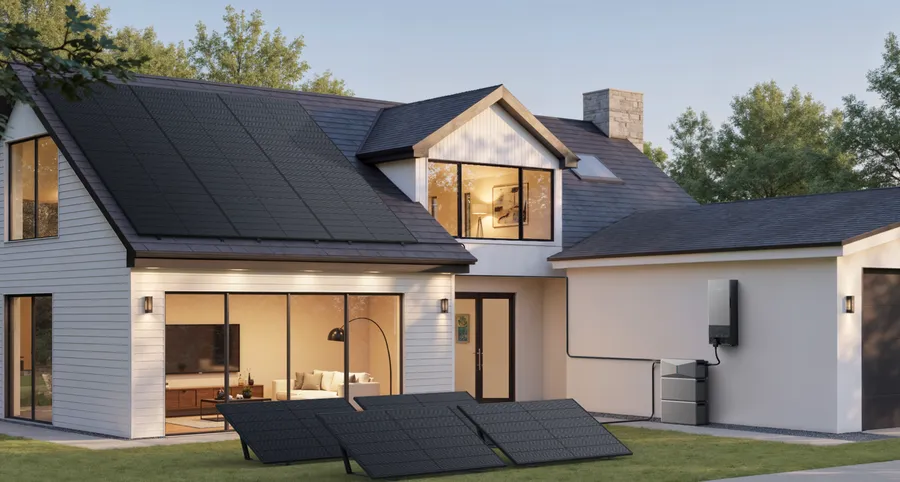
Same house, same comfort.
About a third off the electric bill.
From Belmont Light's time-of-use rate, charging the cars after 8 PM, and adding 36 kWh of home batteries that charge when power is cheap.
The short version
- 💸~$293 less per monthElectric bill drops from about $9,150 to $5,630 a year. About $160/mo of that comes from the rate switch and car schedule (already done); the batteries add about $132/mo.
- 🏠Nothing changes day to daySame thermostat, same hot water. The batteries charge when power is cheap and run the house when it's expensive.
- ⚡Lights stay on in an outageBoth panels switch to battery automatically in a split second.
- 🏷️Black Friday: 36 kWh for $16,598Double the storage, with one battery free. Ends Nov 30.
- 🗓️0% for 24 months, pays for itself in ~10½ yearsAbout $692/mo for 2 years, about $560 of it beyond what the batteries save. After that, the batteries save about $132/mo. They're expected to last about 15 years.

🌙 A winter evening: the battery covers the expensive hours
Green = from the battery. Red = expensive grid power. Gray = cheap grid power.
🗓️ 0% loan: when it pays for itself
Behind while we pay it off, back to even after ~10½ years, ahead after that.
⚡ Evenings fully covered
36 kWh covers the whole 4–8 PM window on most days.
What changes for us day to day?
Almost nothing. The thermostat stays where we like it and hot water stays hot. Most of it happens automatically.
How it works
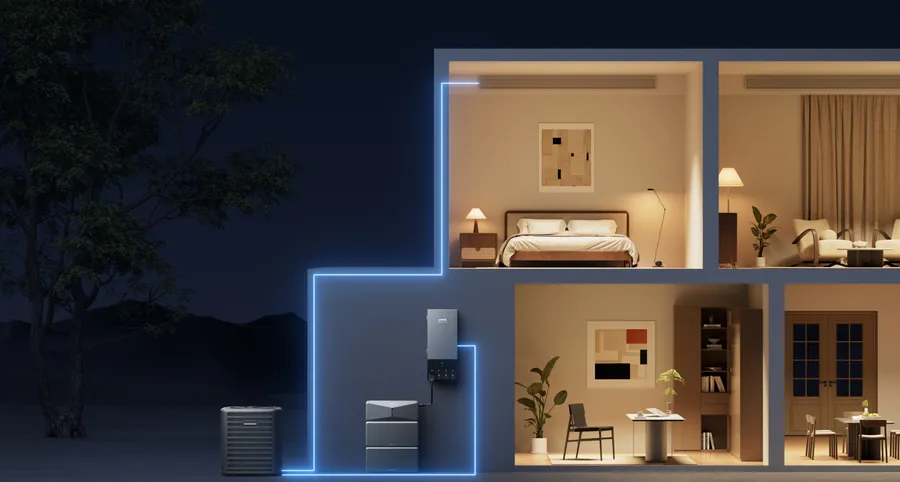
- Cheap hours: Belmont Light charges about 15¢ per unit of power most of the day and night.
- Expensive hours: From 4–8 PM (2–7 PM in summer) it's 37–59¢.
- The battery fills up during the cheap hours and runs the house during the expensive ones.
- Today we pay a flat 25¢ no matter when we use power, so we get no benefit from using it at cheap times.
A typical winter day
Our real average for December–February (cars moved to after 8 PM), hour by hour. With the cars charging after 8 PM, the 4–8 PM window uses about 28 kWh, so 36 kWh covers a typical winter evening with room to spare, and 18 kWh covers about two-thirds of it. Our biggest use is actually 8–11 PM, when power is already cheap.
Our bill, month by month
Based on our actual meter readings from the last 12 months.
The yearly picture
| Plan | Per year |
|---|---|
| Today | $9,150 |
| Time-of-use rate only (costs nothing) | $7,470 |
| + Car charging after 8 PM | $7,210 |
| + Home battery (18 kWh) | $5,850 |
| + Home battery (36 kWh, Black Friday deal) | $5,630 |
That's about $293 less per month on average with 36 kWh. Winter bills fall from about $1,550 to about $950 (about $1,020 with 18 kWh).
Why it's a good deal for us
- The batteries pay for themselves in about 10½ years at today's rates (sooner if rates rise), and they're expected to last about 15.
- Whole-house backup during storms: every light and outlet in both panels stays on. The switch happens automatically in a split second, so nobody has to flip anything.
- Step one is done: we're on the time-of-use rate starting December 1, which alone saves about $1,680 a year. Charging the cars after 8 PM adds about $260.
The deal right now
Anker is giving a free battery on orders over $15,000. Adding two batteries to our plan gets us a third one for free. That's double the storage for about $4,000 more.
| Option | Price | Storage | Free gift |
|---|---|---|---|
| Our plan (2 systems, 3 batteries) | $12,598 | 18 kWh | 2 solar panels |
| Plan + 2 batteries | $16,598 | 36 kWh | 1 battery ($2,499) |

Days the battery covers the whole 4–8 PM window
Each extra battery works out to about $1,333, roughly half of Anker's $2,499 list price. The extra storage covers more of the long 4–8 PM winter evenings: full coverage on about 94% of days, versus 67% with 18 kWh. It adds about $225 a year in savings and doubles the backup during outages.
Paying it off with the savings
The line shows where we stand: every dollar saved on the electric bill, minus every loan payment. Once it crosses zero, the system has paid for itself.
Savings come from our meter data for Nov 2025–Oct 2026 and Belmont Light's posted rates. Synchrony's 4.99% is the lowest advertised rate; the real rate is set at approval. Affirm's 0% is fixed, but the payment must be made every month for 24 months.
What we'd actually pay each month
Electric bill plus the battery payment, month by month from December 2026, compared with doing nothing and with the time-of-use rate alone (which we're already doing). 36 kWh, today's rates.
| Month | Do nothing | TOU only | Battery bill | + Payment | Batteries total |
|---|
Bills repeat our Nov 2025–Oct 2026 usage at today's rates and leave out the power cost adjustment, which is on every bill either way. If rates rise, the batteries save more. "TOU only" includes charging the cars after 8 PM.
When does the battery pay for itself?
The 36 kWh battery saves about $1,590 a year on top of the time-of-use rate and car schedule. Move the slider to match the real price quote.
Installation is $0 (we're doing it ourselves). These numbers leave out backup-power value and assume 15 years of battery life.
The plan
Switch to Belmont Light's time-of-use rate.✅ Done, starts December 1.- ✅ Done: car charging pauses automatically from 4–8 PM.
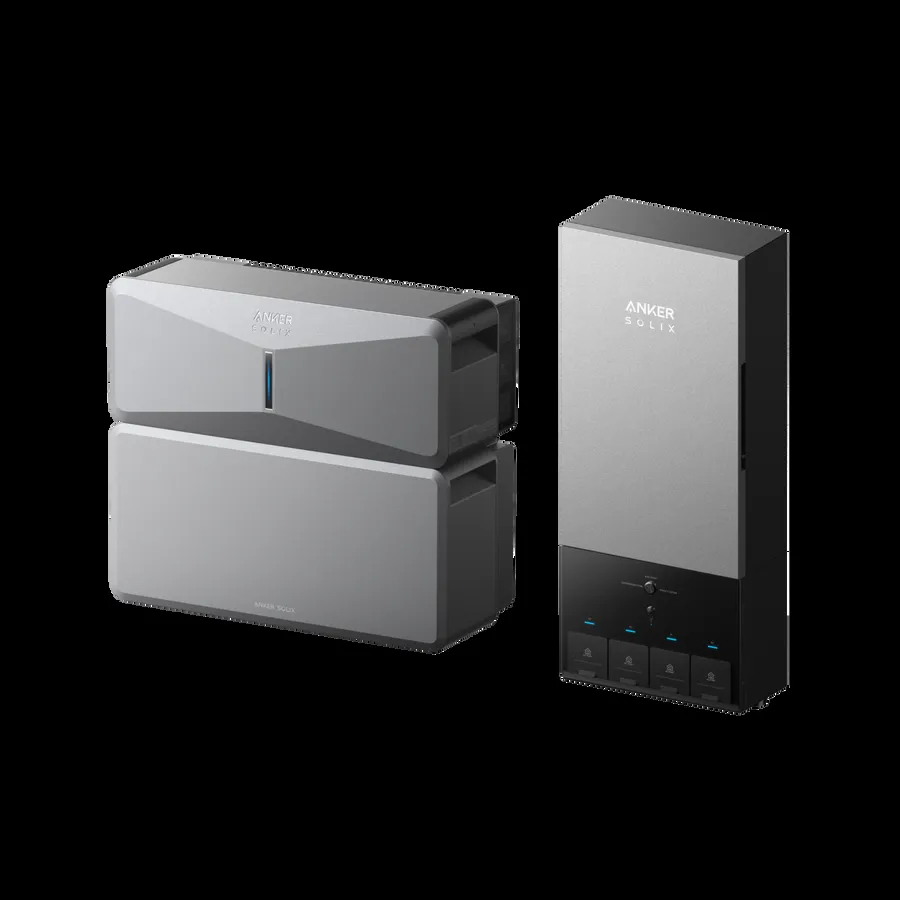
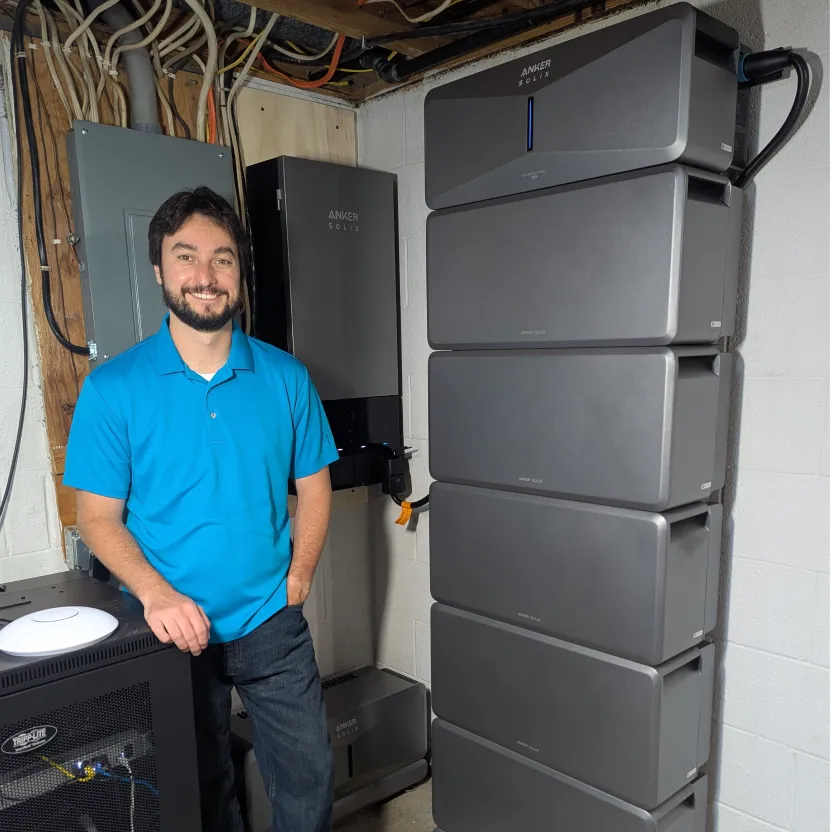
- Order before Nov 30 to get the Black Friday price. Then install two Anker SOLIX E10 systems with automatic Power Docks, one per panel (36 kWh total across 6 batteries, split between the panels). No rewiring.
Product photos: Anker SOLIX (ankersolix.com)